If you’re new to skincare and don’t know where to start, buy this bottle. Naturie’s Hatomugi Skin Conditioner is what half of Japan reaches for the first time they get serious about their skin. It’s cheap, it’s huge, and you really can’t mess it up. We’ve genuinely never met a Japanese person who hasn’t used this at some point, and we think it deserves to be just as big outside Japan.
Taro: This is the exact bottle I started with, in my 30s.
Why hatomugi, of all things
Hatomugi is Job’s Tears, a grain that’s been in Japanese kitchens and medicine cabinets for a long time, usually roasted into a tea (hatomugi-cha). It’s long been associated with clearer, calmer skin in Japanese folk wisdom, which is probably how it ended up in a toner bottle instead of staying in a teapot.
You don’t need to buy into the folklore to get why it’s everywhere now, though. Walk into pretty much any drugstore in Japan and the hatomugi shelf takes up more space than almost anything else in the toner aisle. It’s less “wonder ingredient” and more “the bottle your mom already has under her sink.” That reputation is basically the whole pitch, and it’s exactly the kind of common-knowledge-in-Japan pick we think deserves a much bigger following everywhere else.
Quick facts
| Product | Key ingredient | Texture | Best for | Rating | Price |
|---|---|---|---|---|---|
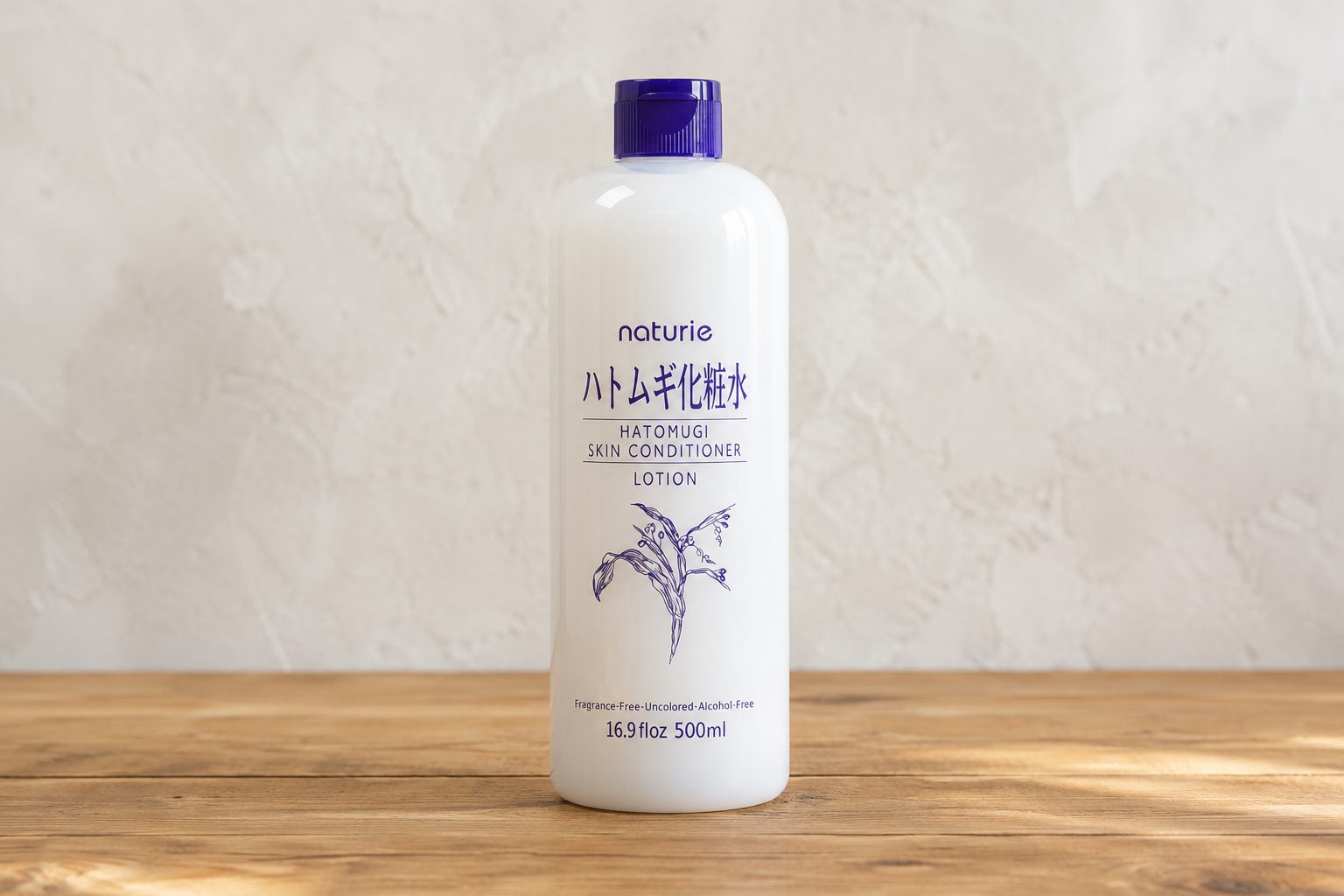 Naturie Hatomugi Skin Conditioner (500ml, 2-Pack) Naturie Hatomugi Skin Conditioner (500ml, 2-Pack) | Coix Seed (Hatomugi / Job's Tears) Extract | Very light, watery | Beginners, oily/combination skin, layering under a heavier cream | Check price → |
What it’s actually like
It’s thin. Almost water-thin. The first time you pour it into your hand, it feels like you’re about to waste half of it through your fingers. You’re not. That’s the point.
Nico: I went through a phase in my 30s of buying thicker, “more grown-up” toners off SNS recommendations. One of them looked great on paper — high hydration, all the right buzzwords. In practice, it sat on top of my skin, and layering an emulsion over it trapped heat underneath. Some nights it verged on itchy. I went back to this bottle almost out of guilt, expecting it to feel too thin for me now. It didn’t. It just sank in, no film, no residue, and my skin felt like it could breathe again.
Taro: My story with this one is less flattering. I grabbed the wrong hatomugi toner at the drugstore once. Half a dozen brands make a near-identical bottle with the same beige label, and I didn’t notice until I got home. Worth checking the brand name before you check out.
Pros
- Goes on light and absorbs in seconds, no sticky residue
- 500ml x2 means you can actually use enough of it, morning and night
- No added fragrance or coloring, so it's gentle on sensitive days
Cons
- In January and February, one bottle alone wasn't enough — needed a cream on top
- Several brands sell near-identical hatomugi toner in similar packaging, easy to grab the wrong one
How we actually use it
Pour it straight into your palms and pat it onto your face and neck. Don’t be shy with it — a bottle this size and this cheap is made for using generously, not rationing drop by drop.
Nico: I soak a cotton pad and hold it against my cheeks for a minute instead, more like a mini pack than a quick swipe. I follow it with a gel from the same line, and my mornings are noticeably less shiny since.
Once you’ve got the habit down and want to upgrade a little, try this: decant some into a spray bottle and mist it over your whole body right after a bath. It’s an easy way to stretch a habit you already have into something bigger, without buying a second product.
Who this is for
- Total beginners: start here. It’s hard to get wrong, and it won’t punish your wallet while you figure out what you like.
- Men building a first routine: this is the bottle to build the habit on. Worry about serums later.
- Dry skin in winter: fine as a first step, but plan on a cream over top. It won’t carry you through January alone.
- Anyone who wants “one bottle just in case”: even once you’ve moved on to fancier stuff, this one’s worth keeping around. It’s less a skincare product at that point and more a security blanket.